Sometimes a capping of concrete is installed more than the sub-floor, to allow for the installation of tile, or radiant floor heating pipes. It really is through this assembly that the forced air system ductwork will be installed, in addition to miscellaneous plumbing and electric lines.
Floor structure
There are three main types of floor structures, generally used in modern construction. Included in these are manufactured joist systems, framed and truss floors.
Of all, the most commonly installed flooring system are framed floors. They contain dimensioned lumber, bearing on external and interior load bearing walls or beams called "flooring joists". Generally the flooring joists are set up, spaced 16" apart. Setting up rim and trimmer joists, to that your ground joists are nailed, finishes the perimeter. Bracing, generally in the kind of bridging, but frequently installed as strapping, prevents the joists from turning in place. One other method used to avoid this kind of turning is normally to glue the sub-flooring to the joists, as the sub-floor is placed. All joists must prolong at least 1-1/2" on to a bearing assembly, of either a beam or full elevation wall, unless metal hangers are installed to provide correct bearing support against additional structural elements. Beams, which support the ground joists over better spans, are built in the kind of laminated joists often referred to as developed beams, or one piece solid load bearing beams, cut from logs or manufactured. Electricians and plumber may frequently cut or drill in to the joist work to install utilities, which is accepted, so long as they don't remove more material than what is required by codes. This kind of floor system is generally the cheapest to install.
Truss floors are simply just that. They are constructed from small dimensioned lumber, interconnected in a webwork pattern by the use of metal or wood plates. Occasionally, the trusses will be built on site, utilizing plywood plates to connect the webwork jointly. Generally they are installed 24" aside, either suspended on bearing wall space or beams, or set up with plywood trim or rim joists around the perimeter. Strapping is set up on underneath side, to prevent submiting place, which really is a common ailment for deep truss elements. Regarding long span truss function, bearing lengths of at least 3" are quite common. Trusses span better distances than framed flooring assemblies and may be designed to span the entire building, eliminating center load bearing helps. They are moderately more costly than framed ground assemblies, but provide a remarkably strong floor with small deflection or "bounce" to it. Another advantage to this type of structural system, is normally that utility installations can be run between your webwork components. By no means allow trades to slice or drill into the members of a truss, for https://en.search.wordpress.com/?src=organic&q=Augusta Georgia they are manufactured exactly for the loading conditions they will undergo during the existence of the building.
The manufactured joist, which really is a relatively fresh product, is often produced from low cost materials in the form of an I beam, similar to steel beams in larger buildings. This implies that the joist is certainly designed with a thicker best and bottom edge, and generally interlocking aspenite vertically spanning between your two. These systems are extremely strong, often with the capacity of spanning the whole width of the building. One drawback is normally that this kind of floor requires special hanger systems created for the joists, to allow them to become hung from one another or against beams/bearing walls. Manufactured joists are becoming a popular flooring system, for they are fairly provide adequate support, reduce labour time and cheap. However, builders have to familiarize themselves using its installations, for poor set up could cause severe structural damage to the joists. A good example is definitely a three point, middle bearing joist, remaining with the top chord uncut, that may possibly fail or pull apart, over the center bearing point.
Sub-floors
There are three main types of sub-flooring installed to cover and span the ground structure. It really is over this that the completed floor will be positioned. The sub-flooring types include raw strip, sheathing and interlocking. It is used not merely to provide a surface for the inside finishes to be placed on, but also to avoid twisting or torque forces positioned on the building. The sub-flooring also allows load sharing within the joist framing program. Often the sub-flooring is definitely glued to the joist function to eliminate creaking floors and to prevent the floor joists from turning.
Raw sheathing will come in 4'x8' sheets, most often installed as 3/4" thick plywood panels. This type of sheathing is adequate for spanning joist work spaced up to 24" aside. The sheathing is certainly lain with the joints staggered in that matter, that no two advantage joints fall into line with adjoining sheets. It is very easy to install, requiring the least quantity of labour. The bed linens are fastened with either 1-1/2" flooring screws, or 2-1/2" fingernails, spaced about 8" apart. Although not necessary, it is smart to provide backers or supports beneath the joints, between bed linens which operate perpendicular to the framed flooring assembly.
Most commonly installed are interlocking sheathing panels. This kind of sheathing is normally 5/8" thick, and manufactured as either plywood or aspenite (commonly known as "chipboard") in 4' x 8' bed sheets. The sheets come with the long edges designed to interlock with a tongue on one advantage, and a grove on the opposing advantage. They are installed by simply pushing or pounding the bed sheets jointly, and nailing or screwing them to the joist work, very much the same as natural sheathing. It is often the cheapest to set up.
Strip floors, were once the most popular kind of sub-ground installed. But with the introduction of manufactured sheathing products, it is becoming less utilized. Strip flooring consist of 1" by 6" or 8" boards, placed diagonally over the floor joist framing system. It really is slightly more expensive to install, and requires experienced tradesmen. To set up such floors correctly, the lumber ought to be non-kiln dried, with a relatively high moisture content material. This might seem odd, however in reality, as the hardwood dries out, it'll shrink. This shrinking actions pulls the floor together, adding strength to the overall system. The advantages of this type of sub-flooring are its strength and durability. One important note, homeowners tend to be disturbed by the small 1/4" wide gaps, generally left between the individual planks after the wood dries out. Although disturbing to observe during construction, upon completion, the spaces aren't noticeable, and really have no effect on the sub-floor elements at all. Strip floors are designed to be interlocking, through lapping or spacing of joints.
Finished floors
Ah the finished what we find, walk on everyday and floor. For homeowners, this tends to be one of the most important factors of the ground system. Yes the framework is a consideration, but the look and texture of the floor is what all that will be visible after building is finished. The most typical installed floor finishes consist of: vinyl sheet, vinyl tile, ceramic tile, wood strip, solid wood parquet, and carpet.
Most popularly used in bathrooms, kitchens, laundry areas and entryways are vinyl sheet, or linoleum floorings. This kind of flooring cones in a huge array of colors, textures and patterns, in sheet sizes of 12 feet widths with varying lengths, and created from a vinyl composite, covered with a surface coating. It is installed through the use of covering over the sub-floor, generally mahogany or particle core sheets 4'x4' in size, to which the vinyl is normally glued to. It can also be installed straight onto concrete floors, in areas such as basements. Joining two bedding together is a standard practice when the area width exceeds 12', or under doorways. Sheet vinyl is an excellent flooring in areas where water tends to accumulate, like around bathroom fixtures or at entry methods. It really is fairly durable, and often maintenance free. Linoleum is among the cheapest types of flooring to install.
Another good flooring for wet areas may be the vinyl tile. Typically it really is manufactured in much the same way as sheet vinyl, but is a lot even more rigid and comes as 12"x12" square devices. They are installed in the much the same way, but require skilled tradesmen, acquainted with proper installation. A good installer will start from the center of the room to ensure that all trim tiles are equal in width at opposing walls. One benefit to this type of flooring, over sheet vinyl, is that it's can be installed, without threat of joint separation, over large areas. For this reason, it is often found in commercial structures where large rooms will be the norm. Vinyl tile may also be easily installed directly to concrete flooring. Like vinyl sheets, it as well is resistant to drinking water, and tends to be installed in the regions of a building, prone to water accumulations. Tile, could be easily cleaned, can be relatively free of maintenance, and among the cheaper finished floors to install.
Ceramic tile is just about the most long lasting types of flooring and is normally installed in entry areas, where sand scuffing and water accumulations are the norm. Bathrooms and kitchens often get this kind of floor treatment as well, but because of the high cost of installation, homeowners have a tendency to not consist of these areas. Ceramic tile are typically a square tile, although interlocking models are on the market, in regular square measurements of 4", 6",8" or 12". They are installed by 1 of 2 primary methods, either set right into a thin mortar bed (called "thinset adhesive"), which also acts like glue, or a heavyset bed of 1-1/2" normal mortar foundation. For all ceramic tile installations, the ground must be built up to guarantee the strength required to prevent tile or joint cracking. Often, installers deposit a material called "cement plank", which is similar to drywall, but is constructed of glass fibers and cement. Regardless, make sure that your installer will provide you with a guarantee against future cracking or uplift of tiles. Ceramic tiles require little maintenance, but beware, water on glossy floor tiles can be very slippery, and several a time, a homeowner has resented installing a higher gloss tile, over a bathroom flooring area.
Wood strip flooring is one of the oldest types of flooring even now popular in the present day age. It includes wood strips, usually interlocking, which are either nailed or glued to the sub-floor. Usually the strips will become prefinished, needing no post applications of sealers or varnishes. This type of flooring is very labour intensive for installation, as well as being quite costly to purchase. However, the email address details are a warm, long lasting floor surface, requiring little maintenance or upkeep. Wood strip flooring significantly increases the power of the support program, reducing the deflection ("bounce") and gives the floor a very solid feel to it.
Of all wood flooring, the most often installed is the parquet tile. They consist of square interlocking solid wood strips, held together with glues and/or metal wires. https://flooringprosga.home.blog/ Often they come as single 6"x6", or multiple 12"x12" square tiles, about 1/4" thick. They are glued directly to the sub-flooring, and are solid enough to span small deviations in it. The real wood is often prefinished, and requires little maintenance. Parquet floors certainly are a cheaper alternative to strip flooring, providing the same warm, durable surface area.
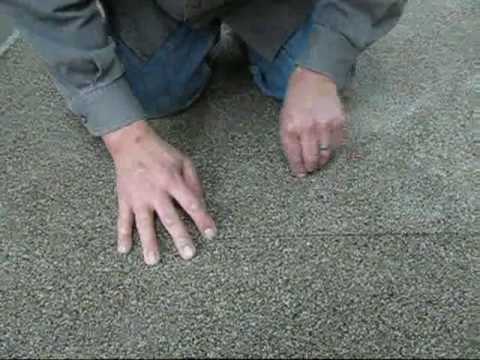
Carpet is probably the most common floor covering that is used in residential homes. It will come in a multitude of shades and textures. Carpet contains woven fibers, which protrude upwards, glued or woven into a foam or jute backing. Often an underpad of pressed foam is usually set up below it or the backing could be essential with the carpet, increasing the softness and offering a much more comfortable surface for walking on. Carpet is installed by either gluing the carpet to the sub-flooring, or the use of carpeting tack around the perimeter. A good carpet will has a close weave, that may not present the backing materials when separated. To lessen project costs, some contractors will choose to install a high quality underlay, with a minimal or medium quality carpet. This gives the soft surface area, with equivalent durability, giving the homeowner the benefits of top quality carpet, at a reduced cost.